
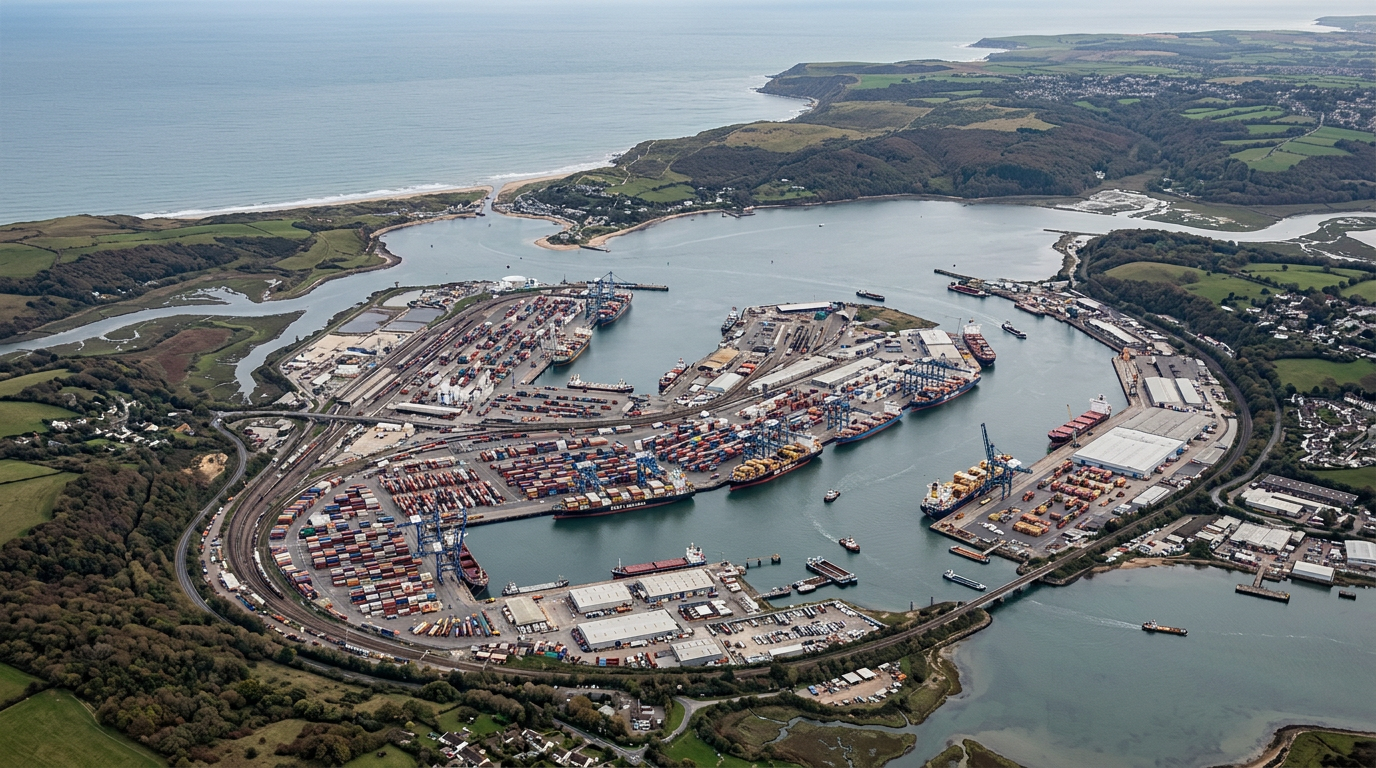
Irish ports
One evidence picture across ports, infrastructure, projects and the environment.
Follow what changed before, during and after major maritime interventions — assembled from the public record, traced to source, and honest about what remains unresolved.
What do you want to understand?
These are entry points into one source-backed evidence picture — not separate products. Choose a lens and the portfolio below narrows to the ports where a record actually exists. Where the public record is silent, we say so plainly.
Evidence around clean-maritime and port-energy interventions
Shore power, vessel electrification, alternative fuels, port energy systems and the environmental monitoring around them — assembled from the public record. This is the current demonstration dataset for Ireland’s ports; the same architecture is built to carry clean-maritime programmes elsewhere. Empty categories mean the record is silent, not that nothing matters.
Clean maritime projects
No verified records connected yet.
Shore power & electrification
1 source-backed record connected.
GREEN DRIFT — Berth 3 upgrade and onshore power supply
Alternative fuels
No verified records connected yet.
Energy infrastructure
15 source-backed records connected.
ORE-capable terminal proposed: 250m wharf extension and reclamation
Air & emissions
No verified records connected yet.
A portfolio of connected ports
Each port is a canonical record — not an entry in a directory. Follow one to receive its material changes, or open its record to see everything connected there.
5 of 5 ports
Port of Waterford Company · In planning
- Latest recorded activity
- ●ORE-capable terminal proposed: 250m wharf extension and reclamation(Jan 1, 2025)
- Connected projects
- 1
- Evidence records
- 1
- Connected evidence domains
- Energy infrastructureDredging & marine ecologyProjects & permitsRegulatory activity
Iarnród Éireann · In planning
- Latest recorded activity
- ●Statutory consultation period closes(Feb 24, 2026)
- Connected projects
- 2
- Evidence records
- 3
- Connected evidence domains
- Energy infrastructureDredging & marine ecologyProjects & permitsRegulatory activity
Dublin Port Company · In planning
- Latest recorded activity
- ◐Dublin Port Company submits response addressing ecology, noise, traffic(Aug 1, 2025)
- Connected projects
- 1
- Evidence records
- 3
- Connected evidence domains
- Water & dischargesNoise & vibrationDredging & marine ecologyProjects & permitsRegulatory activity
Port of Cork Company · In construction
- Latest recorded activity
- ◐€456M M28 Cork–Ringaskiddy road receives Cabinet approval(Apr 10, 2025)
- Connected projects
- 4
- Evidence records
- 5
- Connected evidence domains
- Energy infrastructureProjects & permits
Shannon Foynes Port Company · Operational
- Latest recorded activity
- ●Planning documents reference dredging identifier LIC230014(Nov 1, 2024)
- Connected projects
- 1
- Evidence records
- 2
- Connected evidence domains
- Energy infrastructureWater & dischargesDredging & marine ecologyProjects & permitsRegulatory activity
What changed after the intervention?
For a qualifying maritime project BioVeracity preserves the same chronology: what was true before, what was deployed, when it entered operation, and what the evidence does — and does not yet — establish afterwards. The worked example is Cork Container Terminal (CCT), Ringaskiddy, and every statement below links to its source. We never assert that a project “worked”.
Project
Cork Container Terminal (CCT), Ringaskiddy
Deepwater, multi-modal container terminal at Ringaskiddy — a 360-metre quay at 13-metre depth able to accommodate the largest container vessels calling at Irish ports. Reported at approximately €89 million and described as the largest single marine-infrastructure investment by an Irish port in a century. Funded through the EIB, ISIF, AIB and the EU Connecting Europe Facility.
Baseline
Ten-year planning permission granted for port redevelopment (2015)
Source: pleanala.ieCork Container Terminal became operational at Ringaskiddy (2022)
What was consented and true before.
Deployment
Ringaskiddy ORE Development (CORE1) (≈ €100 million)
Cork Container Terminal (CCT), Ringaskiddy (≈ €89 million)
M28 Cork–Ringaskiddy Road (€456 million)
Ringaskiddy Container Berth Extension (€38.4 million (CEF))
What was funded and built.
Operation
Cork Container Terminal officially opened (September 23, 2022)
When it entered service.
What remains unresolved
The Cork Container Terminal entered operation in 2022. The public record establishes the intervention and its commissioning, but BioVeracity has not connected verified environmental monitoring evidence covering the period after operation began. The question is not whether the project succeeded commercially, but what change — if any — the surrounding air, water and underwater-noise environment shows after the intervention, measured against a pre-operation baseline.
What would help answer it
- Ambient air-quality monitoring near Ringaskiddy (particulate and NO2) compared before and after operation, to test for any change attributable to terminal and associated road traffic.
- Water and sediment sampling in the lower Cork Harbour receiving water, upstream and downstream of the terminal, to establish whether operation coincides with any measurable change in water quality.
- Underwater-noise monitoring during vessel calls and cargo handling, compared with a pre-operation baseline, to characterise any change in the acoustic environment.
What changed across Irish ports?
Not a feed of new files. These are the material changes across the portfolio — a project entering operation, an application lodged, a new evidence requirement identified — each anchored to a date and a port.
- RECORD ADDED
Foynes Island deepwater project secured Maritime Area Consent
The Foynes Island deepwater project (deepwater berth and access-road bridge, part of Vision 2041) secured a Maritime Area Consent from MARA — a material regulatory milestone in the Shannon Estuary.
Shannon Foynes Port
- RECORD ADDED
Rosslare offshore renewable energy hub application lodged (€220M)
A planning application for the €220 million Rosslare Europort offshore-renewable-energy hub has been lodged, with a statutory consultation period. This is a material development in the Irish ports clean-maritime pipeline.
Rosslare Europort ORE Hub · December 10, 2025
- RECORD ADDED
Waterford Belview ORE terminal application lodged
Port of Waterford lodged a planning application on 9 September 2025 for an offshore-renewable-energy-capable terminal at Belview (250-metre wharf extension with reclamation), requiring a Maritime Area Consent and EIAR.
Port of Waterford (Belview) · September 9, 2025
- RECORD ADDED
Dublin Port 3FM application lodged (€1.1bn)
Dublin Port Company lodged its €1.1 billion 3FM Strategic Infrastructure Development with An Coimisiún Pleanála on 23 July 2024 — the third and final masterplan phase for the Poolbeg peninsula.
Dublin Port · July 23, 2024
- INTERVENTION RECORDED
Cork Container Terminal entered operation
A capital intervention reached operation: the Cork Container Terminal was officially opened on 23 September 2022 (operational since 23 April 2022). This establishes the intervention against which any subsequent environmental effect can be measured.
Port of Cork / Ringaskiddy · September 23, 2022
- NEW UNRESOLVED QUESTION
New evidence requirement: environmental effect after operation at Cork
A previously unstated evidence requirement has been identified for Cork: verified environmental monitoring (air, water and underwater noise) covering the period after the Cork Container Terminal entered operation. No such after-evidence is yet connected.
Port of Cork / Ringaskiddy · September 23, 2022
One project. Many evidence owners.
A major maritime intervention is never owned by one organisation. Each keeps its own responsibility. BioVeracity preserves the shared, source-backed chronology that connects them.
From demonstration to evidence
Every intervention follows the same path. BioVeracity keeps each step on one common clock, so the promise made at the start can be checked against what the evidence later shows.
Monitoring is not just sensors
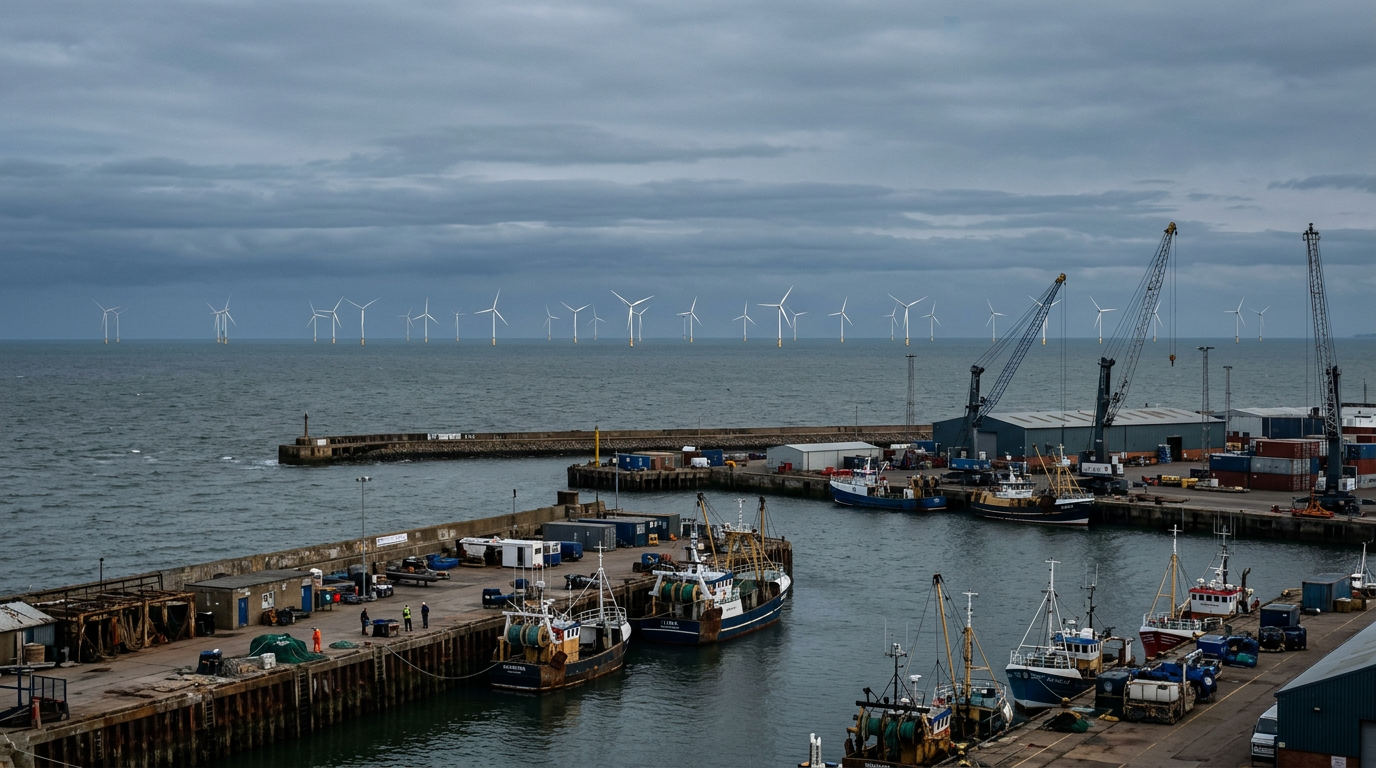
BioVeracity’s value is not owning every source — it is connecting them, on one clock, with clear provenance. The picture can draw on many streams as they become available:
Built to scale from one port to a national programme
Irish ports are the current demonstration dataset. The same evidence architecture — canonical places, source-backed chronology, baseline-to-after Proof of Effect — is designed to support ports and clean-maritime demonstrations in other jurisdictions wherever the data and partnerships exist.
A note on scope. This picture reflects the public record for these Irish ports. It does not imply participation in any specific national funding programme. Where BioVeracity provides baseline, deployment and Proof-of-Effect evidence for a funded clean-maritime programme, that is a separate commercial engagement — kept distinct from the factual port chronology shown here.
What the port tells everyone — and what a programme unlocks
The central insight is never hidden. Anyone can understand what happened at a port. Institutional access is for doing this across an entire programme.
Free
This product understands what happened at the port.
- Search ports and open any port record
- Canonical identity and connected infrastructure
- Recent material changes and headline projects
- What the evidence establishes, what remains unresolved, and what would help
- Limited provenance, limited replay, basic map
Registered
Keep watching the places that matter to you.
- Follow a port or follow all Irish ports
- Material-change digest
- My Places and saved context
Institutional
Now do this across our entire programme.
- Full chronology and full project replay
- Full provenance and the project evidence room
- Proof-of-Effect reports
- Cross-port comparison and portfolio / programme view
- Multi-user collaboration and API
Every clean-maritime project makes a promise.
BioVeracity preserves what was true before.
It records what was deployed.
It connects what happened afterwards.
It shows what the evidence establishes.
It shows what remains unresolved.
And it keeps watching.